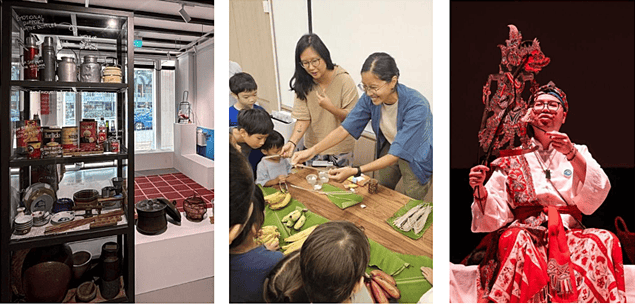
Food vessels are more than everyday objects. From jars and bowls to ceramics and cooking pots, they offer clues to how people prepared, preserved and shared food, while reflecting the traditions and knowledge passed down through generations.
As ArCH Square celebrates its first anniversary, the centre for archaeology and intangible cultural heritage (ICH) presents SHIPPED! Vessels of Taste, its third exhibition, running from 31 October 2026 to 31 March 2027. Curated in conversation with Museum of Food, the exhibition brings archaeological discoveries together with culinary knowledge and practices that continue to shape everyday life, offering visitors a closer look at the connections between food, history and cultural heritage.
What Food Vessels Reveal About the Past
At the heart of SHIPPED! Vessels of Taste is a collection of ceramics, bottles, jars, bowls and fragments that provide evidence of historical trade, technology and patterns of consumption.
Beyond their economic significance, these objects played essential roles in everyday food preparation and consumption. They were used to store ingredients, preserve food, ferment condiments, prepare meals, serve dishes and transport goods. Examining them offers insights into the culinary knowledge and daily lives of the people who used them.
The exhibition also looks beyond the movement of cargo across maritime routes to explore the food practices associated with these vessels. By tracing the journeys of archaeological objects, it reveals how recipes, culinary techniques and knowledge travelled between communities and across generations.
Among the featured artefacts is the Shah Muncher assemblage, which connects archaeological vessels with the production and circulation of fermented condiments. Finds from the Temasek Wreck reveal links between particular ceramic forms and Chinese culinary traditions, while artefacts from the Empress of Asia introduce a different culinary world shaped by industrial production.
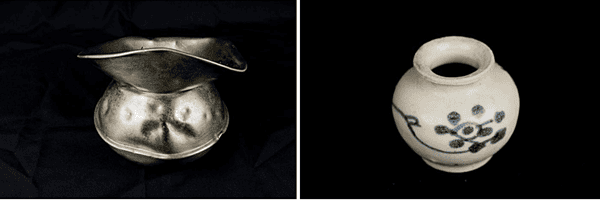
A silverware spittoon [left]uncovered from the Empress of Asia wreck and a jarlet [right], recovered from the Shah Muncher wreck, are among the historical artefacts on display at the exhibition.
Together, these discoveries show how objects from the past can illuminate not only trade and transportation, but also the food traditions and everyday practices that shaped people’s lives.
Exploring Singapore’s Archaeological Discoveries Through Technology
Adding an interactive dimension to the exhibition is the Stratigraphy Kiosk, a digital installation that reveals layers beneath Singapore’s urban landscape.
Drawing on archaeological evidence from the Sultan Gate excavations, the installation invites visitors to explore how ceramics and everyday objects are interpreted within the contexts in which they were discovered. It offers a way to understand how individual finds contribute to a broader picture of the past.
Supported by a donation from Tencent as part of its commitment to advancing digital innovation across Singapore’s museums and heritage institutions, the Stratigraphy Kiosk brings archaeological discoveries to life through an engaging digital experience.
Anyone Can Cook: Keeping Food Traditions Alive
Food heritage is not found only in historical collections. It also lives on through family recipes, home cooking and the knowledge shared between generations.
In a specially curated section titled Anyone Can Cook, Museum of Food explores how culinary knowledge is learnt and passed down through family kitchens, shared recipes, experimentation and guidance from more experienced cooks.
The section highlights the role of everyday cooking in preserving food traditions. Recipes and techniques are often learnt through observation and practice, then adapted as they are shared with others. These experiences help keep culinary knowledge alive while allowing traditions to evolve over time.
Among the artefacts on loan from Museum of Food are a Hacks sweet tin and a rice cooker, identified in the exhibition materials as a cooking pot. These objects offer another perspective on the relationship between kitchenware, food preparation and the cultural memories associated with everyday life.
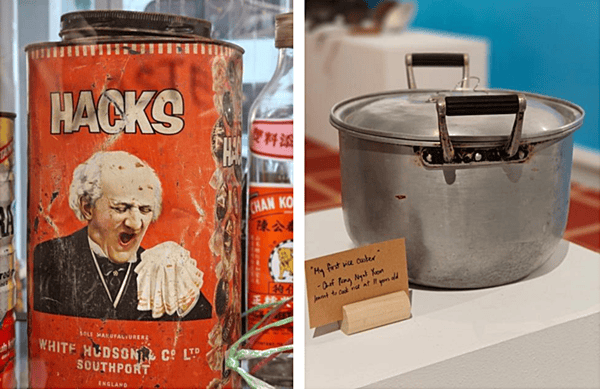
A Hacks sweet tin [left]and a rice cooker (cooking pot) [right]are some of the
artefacts on loan from co-creator, Museum of Food.
Zinnurain Nasir, Curator at HeritageSG, explained that the exhibition explores how vessels reveal more than the journeys of goods. They also provide glimpses into how people prepared and preserved food, shared recipes and passed down culinary traditions. The collaboration with Museum of Food brings different forms of knowledge together, connecting material evidence from the past with food practices that continue to shape lives today.
Archaeology X ICH: Workshops, Storytelling and Hands-On Experiences
Beyond the exhibition, Archaeology X ICH presents a series of workshops, storytelling experiences and activities that bring archaeology and intangible cultural heritage into conversation.
The series begins on 31 October and 1 November 2026 with three experiences: The Time Capsule by Museum of Food and By My Old School, Stories in the Shards by storyteller Hafiz Rashid, and Fermenting Plants for Colours with Wild Dot.
Further programmes will take place through March 2027, providing additional opportunities for visitors to explore heritage through different forms of learning and participation.
From November 2026, Unarchived will introduce a monthly programme of tours, hands-on food experiences and lunchtime lectures. Through conversations, making activities and shared meals, participants can discover how kitchen objects and culinary practices offer insights into the ways people cooked, preserved and ate in the past.
These accompanying programmes extend the exhibition beyond the display of historical objects, creating opportunities for visitors to engage with heritage through storytelling, practical activities and shared experiences.
ArCH Square Enters Its Second Year
Since opening in November 2025, ArCH Square has expanded its work beyond exhibitions through public and educational programmes, hands-on learning and collaborations with practitioners and communities.
Its initiatives have included the sold-out Archaeology 101! introductory course and ICH Open Studio with Sendok Rakyat, alongside efforts to make archaeology and intangible cultural heritage accessible to wider audiences.
As ArCH Square enters its second year, it will continue creating opportunities for the public to engage with these fields while providing platforms for practitioners and communities to share their knowledge and perspectives.
Through SHIPPED! Vessels of Taste and its accompanying programmes, ArCH Square continues this approach by connecting archaeological evidence with living knowledge, cultural practices and community experiences.
Plan Your Visit to SHIPPED! Vessels of Taste
Discover how everyday food vessels can reveal stories of trade, culinary traditions and the people who shaped them at ArCH Square’s latest exhibition.
Exhibition: SHIPPED! Vessels of Taste
Venue: ArCH Square
Exhibition period: 31 October 2026 to 31 March 2027
Opening-weekend programmes: 31 October and 1 November 2026
Visitors can also explore the accompanying Archaeology X ICH programme, featuring workshops, storytelling experiences and activities that connect archaeology with living cultural heritage.
For programme details and ticket bookings, visit Archaeology X ICH on Peatix. Further programme updates and registration information will be available through the ArCH Square website and Peatix.
Whether you are interested in archaeology, food history or the traditions behind everyday cooking, SHIPPED! Vessels of Taste offers a fresh perspective on the objects we often take for granted. By bringing historical discoveries together with living culinary knowledge, the exhibition invites visitors to discover how the stories of food and the vessels that hold it continue to connect people, communities and generations.