In the fast-evolving world of beauty and skincare, where new treatments and technologies are constantly introduced, Roses & More Skin Alchemy takes a more personalised approach, starting with understanding the skin before deciding what it needs.

Located in a preserved shophouse at 64B Peck Seah Street, Tanjong Pagar, Singapore, Roses & More Skin Alchemy is a founder-led skin and wellness studio founded by Jenny Wong Tan and Noel Tan. The studio is built around Skin Sequencing™, understanding what the skin is presenting, then choosing what to do, when to do it and in what order.
Her experiences spanning children and families, botanicals, aromatherapy, intentional skincare across Southeast Asia and advanced skin technologies have influenced Jenny’s approach to personalised care.
Rather than following a fixed treatment approach, Roses & More focuses on understanding the skin’s current condition, history, tolerance and readiness before deciding on the appropriate treatment pathway.
A Different Way of Looking at Skincare
At Roses & More, treatments are selected according to what the skin requires at that particular stage, rather than applying the same approach to everyone.
Skin Sequencing™ recognises that two people with similar concerns may require different treatment plans. Products, manual techniques, technology and homecare are layered according to the skin’s condition on that day.
For Jenny, effective skincare is not always about doing more. Skin that has been repeatedly pushed may require restoration before correction, and the focus is on choosing the right approach at the right time.
Balancing Family, Work and Self-Care
Beyond her work at Roses & More Skin Alchemy, Jenny also shares her experiences as a mother and professional, including how she balances family, work and personal well-being.
Her experiences working with children and families are also part of the perspective she brings to caring for individuals and understanding their unique needs.
For busy mothers and professionals, Jenny shares her thoughts on creating realistic skincare routines that can fit into everyday life. Understanding your own skin, focusing on essential care and paying attention to how your skin responds over time can help create a more intentional approach to skincare.
Interview with Jenny Wong Tan, Founder and Lead Therapist of Roses & More Skin Alchemy
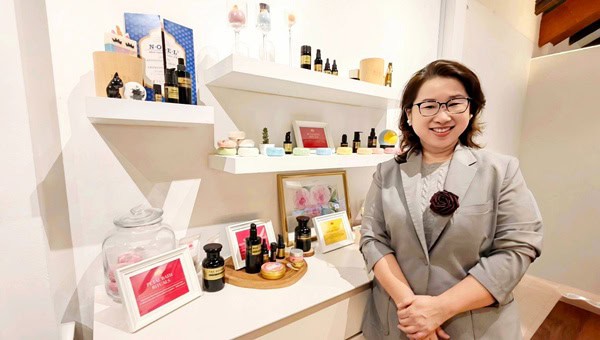
We spoke with Jenny Wong Tan, Founder and Lead Therapist of Roses & More Skin Alchemy, to learn more about her journey, the philosophy behind Skin Sequencing™, her approach to personalised skincare, her experience balancing motherhood and work, and her beauty advice for busy mothers and professionals. Read on to find out more.
1. Your journey has taken you through working with children and families, spending time in Bali, and developing your knowledge of botanicals, aromatherapy, intentional skincare and advanced skin technologies. Looking back, what were some of the experiences that shaped the way you approach caring for people and their skin today?
Jenny Wong Tan: A lot of it came together gradually rather than through one deliberate plan.
Before Roses & More, Noel and I spent years working around children and families, and we homeschooled our four children through primary school. That taught me very early that you can have a good method and good intentions, but the person in front of you may still respond completely differently. You have to observe, adapt and meet people where they are.
Bali added another layer. We were building the botanical side of our business there, running an aromatherapy shop and handcrafting products such as soaps, bath bombs, bath salts and lip balms for retailers and hotels. I also taught organic skincare and spent time in meditation communities, so I became very interested in the relationship between plants, scent, ritual and how people feel.
One experience from around ten years ago stayed with me particularly strongly. A woman who was herself very experienced in beauty and cosmetics came to us with skin that had become so compromised that even water could sting. Instead of adding more and more products, we simplified. Rose hydrosol became part of that very gentle approach. It made me ask much deeper questions about why we so often respond to troubled skin by doing more to it.
Over the years I then learned more about advanced skin technologies, but that earlier lesson never disappeared. Technology can be extremely useful, but it still has to serve the person and the condition of the skin in front of you.
So I think all those experiences eventually converged into the way I work now: understand first, don’t assume that stronger or more complicated is automatically better, and be willing to change course when the person or the skin tells you something different.
2. You have shared the beautiful analogy, “You cannot grow an orchid the way you grow roses.” What does this mean to you, and how does this philosophy influence the way you care for each client at Roses & More?
Jenny Wong Tan: It means that two living things can both need care and still need very different care.
You would never look at an orchid and a rose and decide that because both are plants, they should receive the same amount of water, the same soil, the same light and the same treatment. We accept instinctively that each has its own nature.
Skin is much the same. Two people may both say they have acne, pigmentation, sensitivity or wrinkles, but what is happening underneath can be very different. Their age, barrier condition, lifestyle, stress, climate, previous treatments, products and tolerance all matter.
So at Roses & More, the concern a client names is the beginning of the conversation, not the treatment prescription. We look at what the skin is actually presenting and decide what it needs now. Sometimes that agrees with what the client expected. Sometimes it doesn’t.
The orchid-and-roses analogy reminds me not to force the person to fit a standard answer simply because that answer works beautifully for somebody else.
3. You believe in understanding what the skin is presenting before deciding what to do, when to do it and in what order. When you first meet a client, what are you looking for, and why can two people with seemingly similar skin concerns require completely different approaches?
Jenny Wong Tan: When I say I “read the skin”, part of it is simply being willing to look more closely. Acne is a very good example. Someone can tell me they have acne, but that doesn’t tell me enough to decide what I should do.
I might be looking at whiteheads, blackheads, inflammation, congestion, or several things happening at the same time. I also need to look at the condition of the skin around them. Is it irritated? Is the barrier compromised? What has already been done to it? What is the person using at home? Sometimes the thing that looks most obvious isn’t actually the first thing I should address.
Two of our younger clients illustrate this very well. One may have whiteheads and blackheads that can be prepared carefully so they release much more easily, using appropriate professional products together with a hydrosol mask rather than simply squeezing and picking at the skin. Another can present with acne where there really isn’t anything to extract. In that situation, something like salicylic acid may have a much more useful role. They both have “acne”, but I cannot treat them as though they have the same skin.
There are also times when I may see obvious acne and decide not to address the acne directly that day. If the skin is severely inflamed, calming it comes first. If the barrier is compromised, we may need to concentrate on hydration and restoration before asking the skin to tolerate anything more corrective.
This is something we learned very early, even when much of our work was still in aromatherapy and botanicals. We would look at the different acne presentations and underlying skin conditions before deciding which essential oils, carrier oils or other extracts were appropriate. As our toolbox has grown, that same discipline has become even more important, not less.
And the reading changes over time.
With several of our younger acne clients, we initially did much more hydration and barrier-supportive work. As their skin became more stable, that part of the treatment became much less prominent. One has also been very diligent with his homecare, including using our rose mask twice a week, and he no longer experiences the breakouts he used to have. What I would do for him today isn’t necessarily what I would have done when I first saw him.
The reading also doesn’t stop when the client leaves us. What they do at home, how consistently they do it, what they change, and how their skin responds between visits are all part of what I need to understand when I see them again. Sometimes what happens during those weeks at home tells me as much as what happens in the treatment room.
Some of this does come down to experience, but experience alone isn’t enough. You have to remain observant, curious and willing to learn from the skin. Every treatment gives you information, but so does everything that happens between treatments.
When the client comes back, I am not simply continuing where I left off. I am reading again.
4. Skin Sequencing™ is at the heart of Roses & More. How did this methodology develop from your experience and practice, and what makes sequencing the timing and order of treatments so important to achieving results while respecting the skin’s tolerance?
Jenny Wong Tan: Skin Sequencing really comes down to the read: what I see today, but also everything we have learned about your skin before today.
Sometimes I know something could help your skin. That doesn’t mean I should do it today. To me, that is simply the most logical way to move forward properly. If the skin is inflamed, compromised or simply not ready for what I eventually want to do, then something else needs to happen first. We may need to calm it, hydrate it, rebuild it or simply give it some time.
That is where I think Skin Sequencing goes beyond simply customising a treatment. Customisation can help you adapt what you are doing for the person in front of you. Sequencing also asks when something belongs, what may need to happen before it, and what should come after.
And the sequence isn’t something I decide at the first appointment and then follow regardless. It changes all the time. I may think I know what I will do when I see someone next, but then their skin responds differently from what I expected, their homecare works particularly well, they become irritated by something, their lifestyle changes, or I simply see something different when they come back. So I read again.
That is why what happens between treatments matters so much. Homecare is part of the sequence too. How consistently someone follows it, how their skin responds and what else happens in their life all give me information that can change what deserves to happen next.
Over time our toolbox has become much larger: botanicals, professional skincare, manual techniques and advanced technologies. But having more tools doesn’t mean I should use more of them. It means I have more possibilities to choose from. The important thing is knowing which one belongs now.
For me, Skin Sequencing is therefore not really a fixed treatment programme. It is an ongoing conversation with the skin: understand where it has been, read where it is now, do what it is ready for, observe what happens, and let that help you decide what comes next.
5. In an industry where people are often encouraged to use stronger products, more active ingredients and more frequent treatments, you take a different view. What are the signs that tell you a client’s skin may actually benefit from doing less?
Jenny Wong Tan: Often the skin tells you quite clearly when it has had enough.
Persistent tightness, stinging, unusual sensitivity, redness, dryness, flaking or a sudden increase in small bumps can all make me ask what has recently been added, layered or intensified. Sometimes people are using several individually good products, but the total routine has simply become too much for their skin.
There is also a tendency to think that if one active ingredient is good, several must be better, or that if a treatment works, doing it more frequently must work faster. Skin doesn’t always behave that way.
Doing less does not mean neglecting the skin. It can mean removing unnecessary stimulation, simplifying homecare, restoring hydration and the barrier, and giving the skin enough time to settle before deciding what it needs next.
I would rather temporarily take something away and learn from the response than keep adding more simply because we have more products or treatments available.
6. Roses & More uses advanced technologies such as dual plasma, but the studio is not positioned as being technology-led. How do you decide when technology is appropriate for someone’s skin, and when a more gentle or manual approach may be the better choice?
Jenny Wong Tan: I like technology very much, but I don’t believe the machine should make the treatment decision.
The first question is always what we are trying to achieve and whether the skin is ready for that kind of intervention. Technology can be very useful when we want to create a particular structural or biological response, but there are also times when hydration, botanicals, manual work or simply allowing the skin to recover is the more intelligent choice.
That is why I don’t want Roses & More to become a place where someone walks in and is automatically matched to whichever machine is fashionable or expensive. The technology is one tool among many.
Sometimes I will use advanced technology. Sometimes I will combine it with other approaches over a sequence of sessions. Sometimes I will deliberately choose something gentler.
For me, the sophistication is not in using the most advanced machine every time. It is in knowing when it earns its place in the treatment.
7. Your background also includes years of working around children and families with Noel before Roses & More was established. As a mother and businesswoman, how do you personally navigate the demands of work, home and family, and what have those experiences taught you about making time for yourself?
Jenny Wong Tan: Honestly, I don’t know that I ever achieved what people usually call “balance.” I’ve done far less than what I wanted to. I was really just trying my best, doing what I believed would prepare our children for a world where creativity and resilience matter a great deal more than memorisation ever will.
That was something I took seriously. Sir Ken Robinson has a very well-known talk about how conventional schooling can educate creativity out of children rather than into them, and that stayed with me. Noel and I chose to homeschool our four children through primary school, and one of the things that gave us was flexibility: time to explore, adapt, make mistakes and correct course.
I also think it’s worth remembering that the very clear separation we now make between home, school and work is relatively recent. For much of history, families lived around farms, trades and crafts. Children grew up around the work, learned within the family and gradually participated in what the adults were doing. So I don’t think there is anything particularly unnatural about children growing up inside the work rather than completely apart from it. There can be real wisdom in that.
Our children certainly grew up inside much of what Noel and I were doing.
Through Sanctuary House, they helped us care for children, beyond infancy and up to around ten years old, who had come from abuse and were living with us. That wasn’t something we could completely shield our own children from, nor did we want to. They learned quite young what it meant to make room in your home and your life for somebody who needed it.
Later, they also grew up around the aromatherapy business. They would occasionally smell sample oils when producers sent them to us or take part in a blind test. My eldest, when she was about fifteen, designed the look for one of our sleep-aid soaps, Goodnight Moon, which became very well liked by clients. Over the years, the children would sometimes help us formulate tailored gifts for companies and weddings.
And of course there was the much less romantic side: packing products, being in the room while Mum and Dad worked, and living around a business that didn’t always keep tidy office hours. That was simply part of how our home worked.
When the children reached secondary-school age, they moved into international school in Bali. That was also when we were building the botanical side of our business there, running an aromatherapy shop and handcrafting soaps, bath bombs, bath salts, lip balms and other products for retailers and hotels. So the family and the work shifted together. I was also very fortunate to have enough help that I rarely faced a dramatic situation where the children had to come first and the business simply had to stop, or vice versa.
I think children are often much more resilient and adaptable than we give them credit for. Because homeschooling gave us so much flexibility with time, most of the trial and error that came with getting things wrong, whether with the children, the business or me as a parent, had somewhere to go. There was room to correct it before it became a real problem.
That, to me, was the real luxury. Not balance, but the time to make mistakes and fix them.
Motherhood is one of the best things in life, and looking back, I realise it also taught me things I now use with clients without really thinking about them.
With four children, you quickly realise that the actual goal, raising them into respectable, responsible and independent adults, doesn’t really change. But the way you get there does, because every child has a different character. They respond differently to the same words, the same approach and the same correction. So you learn to adapt and deliver things in a way that each particular child can actually receive and understand.
The other thing motherhood taught me is that growth happens on different timelines, and both matter. Some of it is big and deliberate: a real conversation, or a moment where you have to step in and correct something significant. But so much of it is small, repeated and almost unglamorous. You show them the same thing again and again, patiently, because that’s simply what it takes to stick. Nobody learns responsibility, kindness or even how to tie their shoes from being told once. There is no magic wand for either kind of growth.
I see something very similar in skincare. There are times when we deliberately use a treatment to create a more significant change, and then there is the quieter, repeated work of good homecare that supports and maintains the skin between those interventions. They aren’t competing approaches. They have different jobs, just as one important conversation with your child doesn’t replace years of everyday guidance, and everyday guidance doesn’t replace the moment when a bigger intervention is genuinely needed.
Perhaps that is one of the biggest things motherhood has given me professionally: the goal can remain clear while the path changes according to the person in front of you.
And when it comes to making time for myself, I probably approach that in much the same way. I don’t think self-care has to become another perfectly organised compartment that we somehow squeeze into an already full life. Sometimes it is something much smaller: a bath, taking time with my skincare, enjoying the scent of rose hydrosol, massaging my face, or simply allowing something I already do every day to become a few minutes that belong to me.
Maybe that is more realistic than balance. Life changes, children change, businesses change, and we change too. You keep adjusting. You try to understand what needs your attention now, and you give it what you can.
8. With a busy schedule, family responsibilities and work commitments, many mothers and working women find it difficult to maintain elaborate beauty routines. How do you personally take care of your own skin when life gets busy, and what are your practical beauty and skincare tips for mothers and professionals who want to look after their skin without turning it into another time-consuming task?
Jenny Wong Tan: I may be the wrong person to ask about keeping skincare very minimal, because even when I’m busy there are certain things I simply don’t skip. My full night routine is one of them.
This morning, for example, I washed my face with water, used N·O·E·L organic rose hydrosol, a Swiss hydration ampoule, a Swiss RNA ampoule, a French lifting serum and lifting cream, followed by two different Swiss sunblocks. Tonight I’ll remove the sunblock with a probiotic makeup remover, cleanse again with a probiotic milk cleanser, use the rose hydrosol, the hydration and RNA ampoules again, and finish with a French pigmentation-control serum and cream.
That probably sounds like the opposite of simple! But the important thing is that I don’t believe everybody needs my routine. I know my skin, I know why each step is there, and even then I change things according to what my skin is telling me.
There is a foundation I don’t change very much: cleansing, hydrating and protecting. Within that, I read my skin rather than follow a fixed script.
The same is true with my body care. I dry-brush and use either a honey turmeric argan soap or an organic rose olive soap depending on how my skin feels. If it feels congested or dull, I may reach for the turmeric formulation. If it feels dry or sensitive, I am more likely to choose the rose and olive formulation. The routine responds to the skin, not the other way around.
And when my facial skin is unhappy, for me that usually means dry. My instinct then isn’t necessarily to pile on more products. I often go back to something very simple: my natural anti-ageing facial oil and my hands. I massage it in properly. No fancy tools, just fingers doing the job they were designed for.
Massage matters more to me now, post-menopause, because the skin changes as we age. I know I should probably do it more often than I actually do. It is the classic case of the shoemaker’s children going barefoot: I’ll happily remind a client three times to keep up her homecare and then neglect my own. Knowing what your skin needs and doing it consistently are apparently two different skills.
Interestingly, when I travel I tend to do more rather than less. A different climate can change what my skin needs, and travelling also gives me a little more time away from work and family responsibilities. I bring my own soap, shampoo and conditioner bars, massage oil, bath bombs and even a bathtub cover. If there is no bathtub, I bring a collapsible bucket and soak my feet with bath salts instead. I don’t generally use hotel toiletries or massage oils supplied by massage parlours because I prefer to know what I am putting on my skin.
So my advice to busy women isn’t to copy my routine or anybody else’s. Start by understanding your own skin. Have a few fundamentals you are consistent about, and then learn to recognise when something needs to change.
Skincare shouldn’t become another standard you feel guilty about failing to meet. It should fit your life, respond to your skin and, ideally, contain at least one little thing you actually enjoy doing.
9. You describe part of your philosophy as “meditative skincare.” Beyond creating a relaxing experience, what does this mean in practical terms, and how can women incorporate a little of that same intentionality into their everyday self-care?
Jenny Wong Tan: For me, the clearest example is something I do every single day, and it is actually a version of what I used to teach in my organic skincare classes and meditation communities in Bali to people who wanted to understand natural skincare and aromatherapy more deeply.
I use an organic rose hydrosol from N·O·E·L Aromatics as my toner. Before I spray it on, I stop and inhale. I breathe it in slowly and actually let myself enjoy the scent and the plant. Then I spray it on my face, and sometimes a little into my hair, and comb it through slowly. That small pause, the inhale, the scent settling in and the comb moving through my hair, is the meditative part.
Scent is closely connected with emotion and memory, so for me aromatherapy has never been separate from the experience of caring for the skin. The point is not to make grand promises from a beautiful smell. It is to recognise that something as ordinary as applying skincare can also become a cue to slow down and pay attention.
The ritual continues in small ways. I use a rose hand cream made with rose otto essential oil, rose petal powder and rose hydrosol on my hands, along my collarbone and behind my ears, so the scent quietly returns during the day.
That is what I mean by meditative skincare. It isn’t about adding another complicated ritual. It is about bringing intention to something you are already doing. You may only have thirty seconds, but for those thirty seconds, be there.
10. You have said that your ultimate goal is to see clients less, rather than more, because education and homecare should help people understand their own skin. Why is that principle important to you, and what do you wish more people understood about caring for their skin at home?
Jenny Wong Tan: When I say success can mean seeing a client less, I really mean seeing them less for corrective intervention. That is different from continuing to see them regularly for intelligent upkeep.
If someone originally came to us because their skin was constantly breaking out, irritated or unstable, and over time it becomes calmer and more resilient, then I shouldn’t need to keep intervening at the same intensity or frequency simply because that was what we did at the beginning. Less intervention can actually be a sign that what we have been doing is working.
But skin doesn’t stop changing once we have improved it. We age. Our stress levels change. Our working and living environments change. We travel, encounter different climates and levels of exposure, and our lifestyles evolve. So there will always be things we need to adjust if we want to keep the skin structurally sound and care for it well over time.
Homecare needs to change for the same reason. Even something as simple as travelling to a different climate can change what your skin needs. I think of it a little like supplements for our internal health. We don’t necessarily take the same things in the same amounts forever regardless of what is happening in our lives. We adjust according to what we need. Skincare should be allowed to work in much the same way.
So our goal isn’t to reach some magical point where you never need professional care again. It is to reduce unnecessary intervention while continuing to observe, maintain and adjust intelligently as life changes.
And I don’t say that from some high-and-mighty position that a skincare business shouldn’t want to make a profit. Of course we are a business. The point is simply that the care itself has to come first. I don’t want to keep doing something to your skin just because it keeps you coming through the door.
If your skin needs less intervention now, wonderful. If something changes and it needs more again, we respond to that. If you enjoy coming regularly for upkeep and care, we are very happy to see you. The frequency isn’t the objective. Caring properly for the skin is.
11. After years of working with people, families and clients with very different needs, what is one lesson that life has taught you about not forcing a one-size-fits-all approach whether it is caring for children, managing a family or caring for our skin?
Jenny Wong Tan: If there is one lesson that has followed me through the different parts of my life, it is probably to meet people where they are, rather than where you or they think they should be.
I learned that very early with children. You can have a wonderful method, good intentions and every reason to believe something should work, but the child in front of you may respond completely differently. At some point you have to stop asking why the person isn’t fitting the method and start asking whether the method is right for the person at that particular time.
I think that lesson stayed with me without my really noticing it. It followed us through homeschooling, our work with families, aromatherapy and eventually skincare. And I think it’s actually true for parents too, not just children. You can know exactly what outcome you want for your child and still not be sure of the right steps to get there. Knowing the goal and knowing the path are two different things. I see the same gap with clients.
But you can’t actually meet someone where they are if you’re too attached to where you expected them to be, or where it’s more convenient, or more profitable, for you to take them. So the other part of this lesson is being willing to change course, even when someone has already told you what she came for, and even when going along with it would be the easier or more lucrative thing to do.
I remember a client who arrived certain that wrinkles were her problem, and by every reasonable expectation, her age and concerns suggested the same thing. It would have been simple enough to agree, and a wrinkle-targeted treatment would have been the higher-value service too. But her skin told me something different. It was dehydrated, and dehydrated skin can make lines appear more pronounced. So we treated the hydration and barrier issue first, which was a simpler, lower-cost treatment. And because we started there, by the time we came back to the wrinkles, the problem was already less severe than it first appeared, so the treatment she actually needed afterward was gentler, shorter and less costly than what she’d originally expected to pay for.
She wasn’t wrong to want smoother skin. Her skin just wasn’t quite what either of us had initially assumed, and doing right by it meant doing less, and charging less, before we did more.
Reality gets a vote.
So I try to remain willing to look again, listen again and change course when I need to. That doesn’t mean having no principles. I think it means holding your principles firmly enough to guide you, but not holding your assumptions, or the more convenient path, so tightly that you stop seeing the person in front of you.
Perhaps that is the lesson I would carry across everything: understand first. Don’t force the person to fit the answer you already have, and don’t let convenience decide for you. Pay attention to what is actually happening, and remain willing to learn from it.
12. Roses & More is still a relatively young studio, but it already has a very distinct philosophy. As you look ahead, what would you most like Roses & More to become known for, and what is one thing you never want the studio to lose as it grows?
Jenny Wong Tan: I would like Roses & More to become known for judgement.
Not for one machine, one ingredient or one signature treatment, because all of those things will continue to change. Technologies improve. Products change. We learn more. What I hope remains recognisable is the way we think before we act.
I would like people to know that when they come to us, we will look first, listen properly and recommend what makes sense for them, even if that means doing less, choosing something simpler or telling them that the treatment they expected is not what I would do today.
I also want us to keep bringing together the two sides of skincare that are sometimes treated as opposites: botanical care and advanced treatment. I don’t see a contradiction. A beautiful plant-based ritual can have a place, and so can sophisticated technology. The skill is knowing what job each is being asked to do and when it belongs in the sequence.
As Roses & More grows, the one thing I never want us to lose is that willingness to see the person in front of us. Systems, protocols and training are important because they help us become more consistent, but they should never make us stop observing.
If we can grow while keeping that curiosity, care and willingness to change course when reality tells us to, I will be very happy.
At the heart of Roses & More Skin Alchemy is the belief that skincare begins with understanding. Through Skin Sequencing™, the studio focuses on assessing the skin’s condition and choosing the appropriate approach based on what the skin needs at that moment. With an emphasis on personalised care, education and helping clients better understand their own skin, Jenny Wong Tan hopes to encourage a more thoughtful and intentional approach to skincare. To find out more about Roses & More Skin Alchemy and to book your experience, please visit https://rosesnmore.com/